
Meet the Founder
Experience, knowledge and a genuine passion for solving pest problems
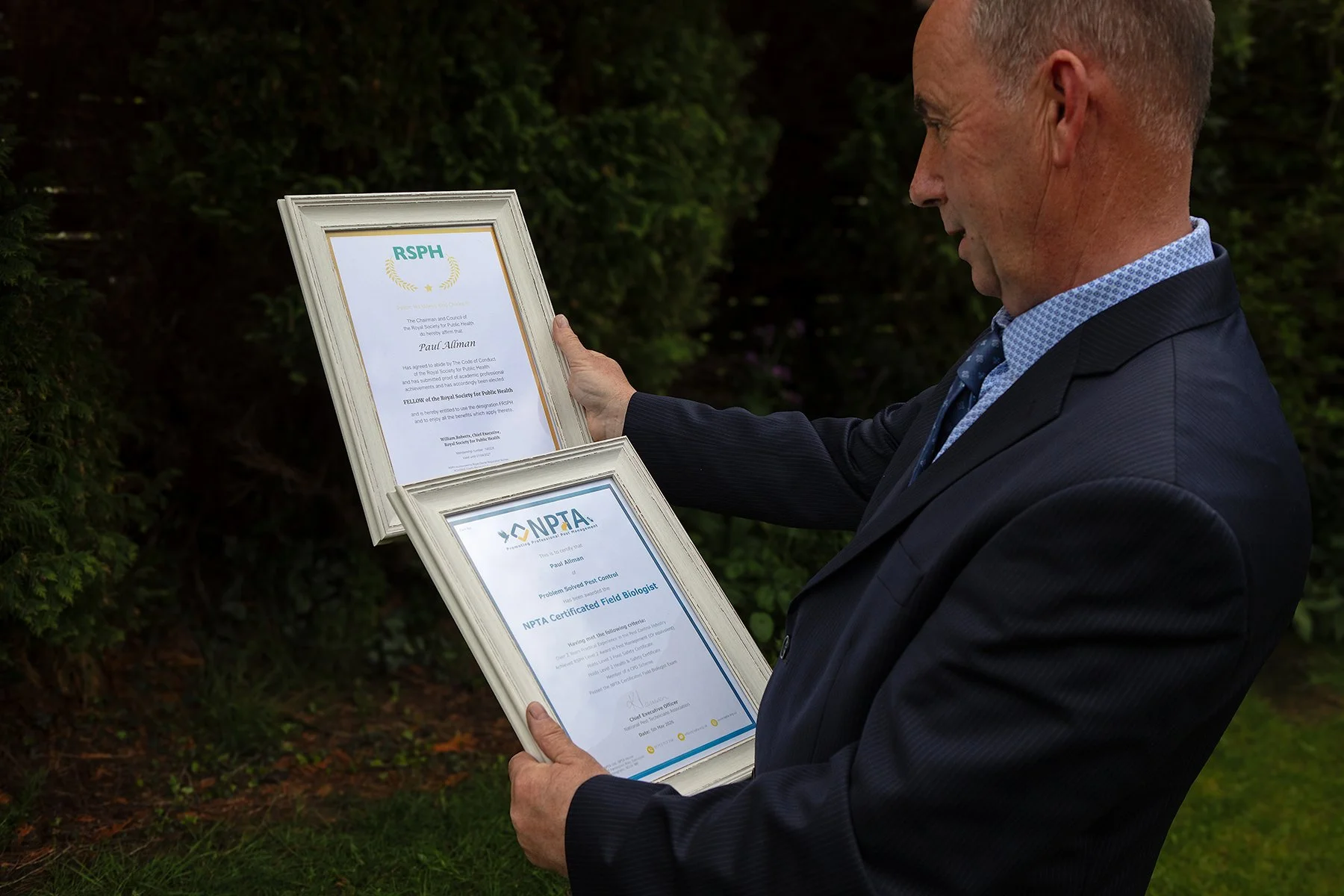
Behind every successful business is a story, and for me, pest control is about much more than simply treating pests. It is about understanding why the problem has occurred in the first place, finding the root cause and providing a solution that gives my clients confidence and peace of mind.
I have always considered myself to be honest, reliable, punctual and hardworking. I am also someone who is always willing to learn, listen and develop my knowledge. These values have stayed with me throughout my career and continue to shape the way I work with every client.
A lifelong passion for the natural world
My interest in the natural world began long before I entered the pest control industry.
In 2007, I developed a passion for falconry and began training and flying Harris Hawks, Red-tailed Hawks and Saker Falcons. This eventually led to me using birds of prey professionally to help protect businesses from problems caused by seagulls and feral pigeons.
Working with birds of prey taught me a great deal about animal behaviour, patience and observation – skills that have proved invaluable throughout my career.
Dogs have also been a major passion throughout my life. I have trained spaniels for organised shooting days, as well as lurchers and terriers to mark and indicate areas where rodents may be harbouring.
Understanding animal behaviour has always fascinated me, and this natural curiosity has become a fundamental part of the way I approach pest control today.
Why pest control?
After 25 years in the industry, my passion for pest control is stronger than ever.
What I find most rewarding is solving problems that other companies may have struggled to resolve. I enjoy investigating a situation, understanding the behaviour and biology of the pest involved, identifying the root cause and putting the right solution in place.
Every day brings a different challenge. No two sites are exactly the same, and effective pest management requires more than simply applying a treatment. It requires knowledge, experience, careful investigation and the ability to make informed decisions.
For me, it is incredibly satisfying when a client can finally have confidence that their pest problem has been properly understood and resolved.
I pride myself on being honest with clients. Sometimes the solution is straightforward; other times, further investigation or remedial work is required. My role is to explain what I have found, provide clear advice and make sure my clients understand what needs to happen next.
My work is carried out to the professional standards expected by the British Pest Control Association (BPCA), and I am proud to hold the Certificated Field Biologist qualification – recognised as the highest professional qualification within the pest control industry.
Achieving this qualification required significant study, hard work and dedication, and passing it was a particularly proud moment in my career.
Real problems require real investigation
Over the years, I have dealt with a huge variety of pest problems. Some of the most interesting cases demonstrate exactly why identifying the root cause is so important.
A long-term German cockroach infestation
I was contacted about a long-standing German cockroach problem after several pest control companies had previously attended the premises without resolving the infestation.
A thorough survey was carried out to establish exactly where the cockroaches were harbouring and how they were gaining access to different areas of the building.
A significant infestation of German cockroaches (Blattella germanica) was identified. Monitoring devices were strategically positioned throughout the premises to establish where activity was highest.
The investigation identified the root cause within an adjoining boiler room.
Rather than simply treating the areas where cockroaches were being seen, the treatment programme focused on the source of the infestation. Insecticide gel baits were carefully placed in appropriate locations, housekeeping recommendations were provided and proofing issues were addressed.
Follow-up visits were then carried out to monitor activity and ensure numbers continued to decline until the infestation was successfully brought under control.
This is a good example of why simply treating the pest you can see is not always enough. Understanding the biology, behaviour and harbourage of the pest is essential to finding a lasting solution.
Finding the cause of a persistent rodent problem
Another memorable case began with a simple phone call from a warehouse experiencing a long-term rodent problem.
A detailed survey identified a number of proofing defects, including gaps around the external walls and underneath exit doors. Recommendations were made and the necessary remedial work was carried out alongside a trapping programme.
However, the investigation did not stop there. Further inspection of the main drainage system revealed fresh rat droppings. A camera survey was recommended, which identified a break in the main drain. Once the damaged drain was repaired, the rodent problem was resolved.
The important lesson from this case was that the rodents were not simply a problem within the warehouse itself. The underlying issue was an access point within the drainage system.
Finding that root cause prevented the problem from continuing to return.
The biscuit beetle mystery
During another site visit, large numbers of biscuit beetles were discovered inside an electric fly killer unit located within a staff changing room.
The surrounding area was inspected, including the staff lockers. Inside one of the lockers was an old box of dog biscuits. The source of the infestation had been identified.
Removing the source resolved the underlying problem – another example of why careful inspection and attention to detail are so important in pest management.
An emergency call about flying insects
On another occasion, I received an emergency call about large numbers of flying insects in a reception area.
Following an inspection, the insects were identified as fungus gnats (Sciaridae). The investigation then turned to the environment in which they were thriving. Plants within the reception area were found to be significantly overwatered, creating the ideal conditions for the insects.
The plants were removed and the source of the problem was eliminated. Again, the solution wasn't simply about treating the insects that could be seen. It was about understanding why they were there in the first place.
Looking beyond the pest
These experiences highlight what I believe good pest control should be about. Whether it is a rodent, cockroach, beetle or flying insect, identifying the pest is only the beginning. Understanding its life cycle, behaviour, habitat and source allows me to investigate the problem properly and develop a more effective solution.
That scientific and investigative approach is something I have developed throughout my 25 years in the industry, and it remains one of the things I enjoy most about my work.
Outside of work, I still enjoy learning, keeping active and spending time pursuing my other interests. I train regularly in the gym and practise Tai Chi, while the summer months are often spent growing dahlias to a professional show standard.
In 2025, I was particularly proud to win the Earl of Harwood Perpetual Trophy at Newby Hall for my dahlias.
For me, whether I am working with plants, animals or solving a pest problem, the same qualities apply: patience, observation, knowledge and attention to detail.
After 25 years in pest control, I still enjoy the challenge of every new investigation – and there is nothing more rewarding than finding the answer to a problem that has been causing a client concern for months or even years.
That is what drives me to keep learning, keep investigating and keep providing the highest possible standard of pest management